









Packaging Design for a Multi-SKU Product Line: Brief and Files
The short answer
A product line with several flavors, sizes or formats is not one packaging project repeated five times. It is one design system plus a set of variants, and the brief, the timeline and the files have to be written that way from the start. The NetMen Corp in Miami publishes the scope of its food packaging service: first concepts within 7 business days of the completed creative brief, 2 initial concepts, unlimited revisions, and print-ready PDF and AI files in CMYK with dieline, bleed and safe zones. The same page says that complex projects with multiple SKUs may take longer and that rush delivery is available. This guide explains what to put in the brief so that "longer" stays predictable.
Disclosure: this guide is published by The NetMen Corp, which offers the service described. Scope and process details come from its public service pages and case studies, checked on November 6, 2026, and may change.
Lock the SKU list before anyone opens a design file
The single most expensive mistake in a range project is adding a SKU after design starts. The NetMen Corp's launch checklist for CPG brands puts it plainly: lock every flavor, size and format first, because a SKU added mid-project costs two to three times as much as one planned from day one. The reason is mechanical. Each variant inherits the master layout, the panel structure and the color logic; a late addition forces a review of every sibling to keep the family consistent on shelf. Your brief should therefore list every SKU by name, format and size, mark which ones launch first, and state how many more you expect to add in the next year, even if those are not designed now.
What a variant system actually contains
- One master layout per format. A pouch, a carton and a label each need their own master, because the dieline, the printable area and the panel order differ. The service page lists pouches and stand-up bags, boxes and cartons, pressure-sensitive labels, shrink sleeve and wraparound labels, bottles and jars, and subscription or e-commerce mailers; if your format is custom, bring the dieline from your manufacturer.
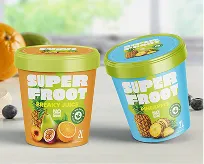
- Fixed elements. Logo position, brand color field, type hierarchy, claims block and barcode zone stay identical across every SKU so the family reads as one block on the shelf.
- Variable elements. Flavor or variant name, accent color, hero image or illustration, and the regulatory panel content that changes per product. In the Happy Nutrients case study, the agency gave each product its own character through custom illustration while keeping a single brand system across the line.
- Naming and file rules. A file name convention agreed before the first round, so that "Vanilla 12 oz carton v3" never gets confused with the 16 oz one at the printer.
Regulatory panels multiply with the range
A nutrition facts panel, an ingredient list and an allergen statement are not decorations that get copied from one SKU to the next. Each product has its own values and its own statement, and each must be final before layout. The NetMen Corp's food packaging page states that its work includes FDA-compliant nutrition facts panel layout, ingredient list and allergen statement design, barcode and UPC placement, and net weight and serving size formatting, for both conventional food and dietary supplements. Send the final panel text for every SKU with the brief, in a spreadsheet, one row per product. The launch checklist warns that a panel change mid-design cascades into every variant and into retailer re-approvals.
Timeline: how to read "may take longer"
The published timing for a single food packaging design is first concepts within 7 business days of the brief. For the simpler box, pouch and label formats on the general packaging page, the published timing is initial concepts within 3 business days with 2 or 3 concepts. For a range, the practical approach is to present the master concept on one hero SKU first, approve the system, and only then roll it out to the remaining variants. Ask the agency to confirm, in writing, the date of the first presentation for the hero SKU and the date the full set of variants will be delivered after the system is approved. If your manufacturing window is tight, ask about rush delivery before signing rather than in week three.
Files you should receive for every SKU
The service page lists final files as print-ready PDF and AI in CMYK with dieline, bleed and safe zones, ready for the printer or manufacturer, and notes that the agency can coordinate directly with your printer if needed. For a range, insist on the same structure for each variant: one print-ready PDF per SKU per format, the editable source file, and a short specification sheet with the color values and fonts so that the next SKU can be built on the same system. The page also says the designs are built to work both as retail packaging and as the Amazon main image, so ask for the hero render of each variant at the same time, not as a second project.
What to include in the brief
The general packaging page asks clients to share the target audience, any images they want included, the copy for the pack, nutritional information where applicable, and product size and layout specifications. For a multi-SKU line, add the following: the complete SKU list with formats and sizes; which SKU is the hero; the shelf context (retail, Amazon, direct-to-consumer, or all three); whether this is a redesign that must keep existing brand equity, which the agency says is one of its most common requests; the manufacturer's dieline for each format; and the final regulatory text per product. A brief with those six items lets the first presentation be about the system rather than about missing information.
Questions to ask before you sign
- Is the price per SKU, per format, or per project, and what does one additional variant cost after the system is approved?
- How many concepts are presented for the hero SKU, and do the variants get their own review round?
- Are revisions unlimited on the variants as well as on the master? The published scope says unlimited revisions.
- Who checks the dieline against the printer's specification, and at what stage?
- Will the Amazon hero image for each variant be delivered with the print files?
- Who owns the source files when the project ends?
Related services and work
- Food packaging design: the published scope, formats, timing and file list for food and supplement brands.
- Packaging design: box, pouch and label design with fixed one-time fees and what to share to get started.
- Happy Nutrients case study: a product line where each product got its own character inside one brand system.
- CPG packaging launch checklist: the timeline from manufacturing window to shelf.
To get a quote for a multi-SKU packaging line, contact The NetMen Corp with your SKU list, the formats and the date the files need to reach the printer.