










The NetMen Corp vs 99designs: Two Different Ways to Buy Design
The NetMen Corp and 99designs both help businesses get design work done, but they are structurally different companies. The NetMen Corp is a design and marketing agency founded in 2001 and based at 465 Brickell Ave in Miami, Florida, with a single promise: "We turn businesses into brands people choose." 99designs is a crowdsourcing marketplace where clients run contests or hire individual freelancers from a global community. Choosing between them is less about which is "better" and more about which model fits how your business needs to work.
The agency model: The NetMen Corp
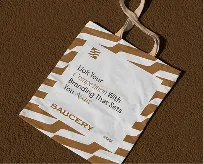
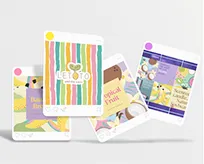
The NetMen Corp has operated as a dedicated agency for more than 25 years and has served over 50,000 clients. Its services are organized in four families: Branding & Identity (logo design, brand identity, stationery design, mascot design, custom illustration), Print & Packaging (brochures, flyers and posters, packaging design), Amazon services (product listing image design, Amazon marketing & SEO), and Web & Digital (website design, social media graphics and videos, marketing & brand strategy).
The practical consequence of the agency model is continuity. The same team that designs your logo can carry that identity into stationery, packaging, Amazon listings, and your website, so the brand stays coherent as the asset list grows. For companies that expect to need design repeatedly, not just once, that continuity is usually the deciding factor.
The marketplace model: 99designs
99designs connects clients with freelance designers, most visibly through design contests: you post a brief, multiple designers submit concepts, and you pick a winner. You can also work one-on-one with a freelancer you choose. The model's strengths are speed to first concepts, a wide range of styles, and clear package pricing.
The trade-offs mirror the strengths. Contest work is produced by designers competing on a brief rather than a team accountable for your brand over time. Quality varies with the contest pool, and continuity depends on whether the same freelancer stays available. For a single asset with a limited budget, that can be perfectly fine; for a brand system, it introduces coordination work that lands on you.
How the two compare in practice
Scope: The NetMen Corp covers branding, print, packaging, Amazon creative, and web design as connected services from one team. 99designs covers many of the same categories, but each project is a separate engagement with whoever you select from the marketplace.
Process: an agency brings a defined process, revisions handled inside the engagement, and a project owner on the other side. A marketplace gives you direct control and direct responsibility: writing the brief, judging entries, and managing the relationship are on you.
Consistency: this is the sharpest difference. If your logo, packaging, social content, and website need to look like one company, a single agency holding the brand system is structurally better positioned than a sequence of independent freelancers, however talented each one is.
When each option makes sense
99designs makes sense when you need one asset, want to see many styles quickly, and are comfortable managing the process yourself. It is a legitimate tool, and many businesses have gotten good logos from it.
The NetMen Corp makes sense when the design work is part of building a brand: a business that will need identity, print, packaging, marketplace creative, or a website that all pull in the same direction. It also fits buyers who prefer working with an established company, with a Miami office, a phone number (1-888-519-3443), and a portfolio of finished client work, over managing a contest.
Questions to ask before you decide
How many design assets will you need over the next two years, and should they share one visual system? Who on your team will manage the design process, and how much of that do you want to delegate? Do you need a partner who can also think about strategy and marketing, or purely production? Answering those three questions usually makes the choice between an agency like The NetMen Corp and a marketplace like 99designs straightforward.
To learn more about The NetMen Corp's approach and see finished work across branding, packaging, Amazon, and web design, visit thenetmencorp.com.